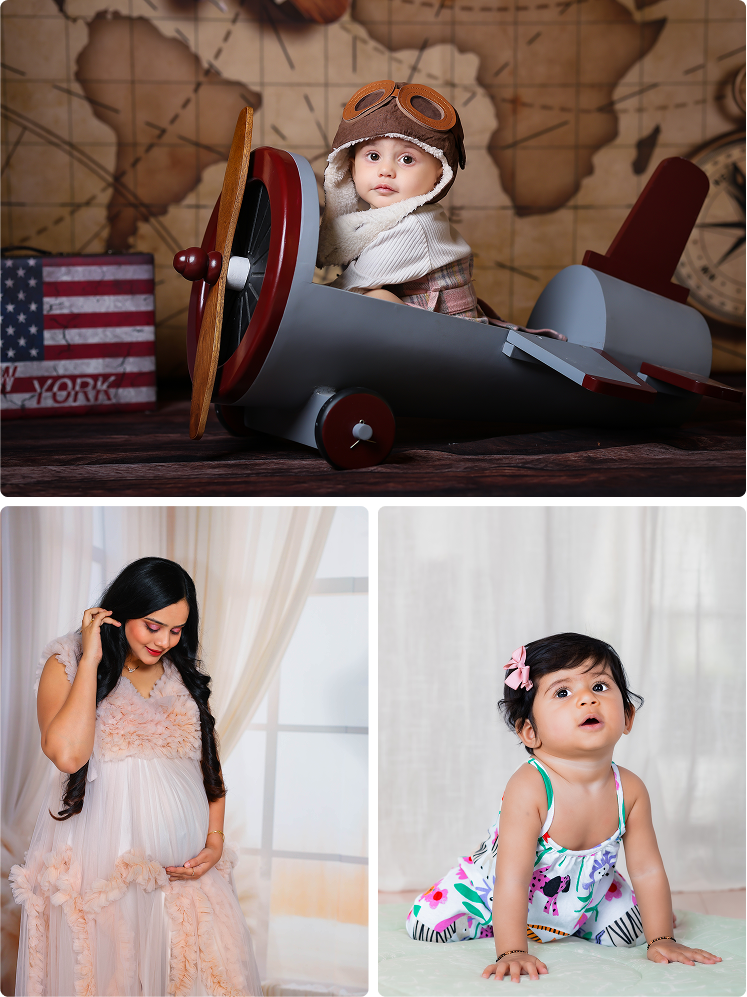
When children are young, they rarely understand why parents take so many photographs.
They may run away when the camera comes out, complain about posing, or wonder why everyone wants “just one more picture.”
And that’s perfectly normal.
A photograph taken today is usually important to the adults who are living through the moment. The child may not think much about it at all.
But years later, that same photograph can have an entirely different meaning.
A child who once complained about family pictures may eventually become an adult who looks at an old photograph and wishes there were more of them.
They may want to remember what their parents looked like when they were younger, see their childhood home again, remember a grandparent, or simply understand what their family life looked like before everyone grew older.
That is one of the quiet reasons family photographs matter.
They preserve parts of childhood that children may not fully appreciate while they are living through them.
Children Don’t Remember Every Part of Their Childhood
Early childhood contains thousands of experiences, but people do not retain a detailed conscious memory of everything that happens during those years.
Photographs cannot recreate forgotten experiences, but they can provide visual reminders that help families talk about them.
A photograph of a toddler sitting with a grandparent might prompt a parent to say:
“You always wanted to sit beside Grandma when she visited.”
A photograph from a family trip might bring back a story about a particular place.
A picture of a child’s bedroom might remind everyone of the toys, books, and routines that filled that period.
The photograph becomes a doorway into a larger story.
Family Photos Show Children Where They Came From
As children grow older, they naturally become more curious about their own history.
Questions can change from:
“Why did you take this photo?”
to:
“What was I like when I was little?”
“Where did we live?”
“What were you like when I was a baby?”
“Who was in our family then?”
“Did Grandma always look like that?”
Photographs give children something tangible to explore while they ask these questions.
A collection of family photos can show different stages of a child’s life and the people who were present during those stages.
Over time, the photographs become part of their personal history.
They Can See How Much Everyone Has Changed
One of the most fascinating things about old family photographs is change.
Children grow.
Parents age.
Grandparents change.
Homes are renovated or left behind.
Clothes and hairstyles become outdated.
Family traditions evolve.
A photograph captures one point in that journey.
When children look at photographs from several years apart, they can see these changes for themselves.
They might notice how small they once were or recognize a family member at a much younger age.
That visual comparison can make the passage of time easier to understand.
Photos Can Help Preserve Relationships With Grandparents
Some family photographs become especially valuable because they preserve relationships across generations.
A photograph of a child with a grandparent may seem ordinary when it is taken.
Years later, it may become one of the most meaningful photographs in the family.
This is particularly true when children grow older and begin to understand their family history more deeply.
Photographs can preserve visual reminders of people, places, and relationships that may no longer be part of everyday life.
That does not replace real memories or relationships.
But it can give families something physical to return to when remembering someone.
Children May Eventually Want to See Their Parents as They Were
Family photographs are often focused on children.
Parents photograph their baby’s first smile, first birthday, first steps, school events, and countless milestones.
But there is another side to the story.
Children may eventually want photographs with their parents, not just photographs of themselves.
When adults look through their childhood albums, they often become interested in seeing their parents at the same age or stage of life.
A photograph of a parent holding a newborn can become meaningful because it shows the relationship, not simply the child.
This is one reason family photographs should include the adults too.
Don’t always stay behind the camera.
Children Can Discover Their Family Story Through Photos
Family history can be difficult to explain entirely through words.
Photographs can make it easier to show.
A family album might contain:
- Parents before having children
- Pregnancy photographs
- Newborn photographs
- Grandparents with grandchildren
- Family celebrations
- Festivals
- Holidays
- Family homes
- School milestones
- Birthday celebrations
- Everyday family life
Together, these photographs tell a story.
The individual pictures may not seem extraordinary.
But when viewed together, they can show a family’s journey through different stages of life.
Ordinary Photographs Can Become Extraordinary Later
Parents often assume the most important photographs are the professionally planned ones.
They can certainly be valuable.
But ordinary photographs can become just as meaningful.
Think about a photograph of:
- A child eating breakfast
- Siblings playing on the floor
- A parent reading a bedtime story
- A grandparent holding a sleeping baby
- A favorite childhood toy
- A family pet
- A messy playroom
- A weekend walk
- A family sitting together at home
At the time, these moments may seem completely ordinary.
Years later, they can provide details that professional portraits cannot.
They show what everyday life actually looked like.
A Photograph Can Preserve Details You Didn’t Know You Would Miss
Memory tends to simplify the past.
You may remember that your child loved a particular toy, but forget what the toy actually looked like.
You may remember your old home but forget the details of the living room.
You may remember your child’s favorite outfit but not remember the exact pattern.
Photographs can preserve these small details.
They can show:
- Furniture
- Clothes
- Toys
- Hairstyles
- Rooms
- Family pets
- Cars
- Decorations
- Favorite places
- Everyday routines
These details can become surprisingly valuable over time.
Photos Can Give Children Something to Ask About
A photograph does not need to contain every answer.
Sometimes its value comes from the questions it creates.
A child looking at an old photograph might ask:
“Why were we there?”
“Who took this?”
“Why did we live in that house?”
“What was I doing?”
“Where is this?”
“What happened after this?”
These questions give parents an opportunity to tell stories.
Instead of simply saying, “That’s you when you were two,” parents can share the context.
“That was the day you met your cousin.”
“We had just moved into this house.”
“You wouldn’t stop carrying that toy.”
“Grandpa came to visit that weekend.”
The story gives the photograph meaning.
Family Photos Can Preserve a Sense of Belonging
Children grow up understanding themselves partly through their relationships with other people.
Family photographs can visually reinforce those connections.
An album can show children that they were surrounded by people who shared different stages of their lives.
Parents.
Siblings.
Grandparents.
Cousins.
Extended family.
Family friends.
Each photograph can represent another relationship.
This is especially useful as children grow older and their social worlds become larger.
Looking back at family photographs can remind them of the relationships that were part of their early years.
Don’t Only Photograph the “Perfect” Family
There is a temptation to make family photography look perfect.
Everyone dressed beautifully.
Everyone smiling.
Everyone looking at the camera.
Those photographs can be lovely.
But children may eventually appreciate photographs that show something more genuine.
A child laughing unexpectedly.
A parent comforting a tired baby.
Siblings making each other laugh.
Grandparents playing with grandchildren.
A child concentrating on a favorite activity.
A family sitting together after a long day.
These moments may not look perfectly posed, but they can tell a more honest story about childhood.
Professional Family Photography Has a Place Too
Everyday photographs are important because they document life as it happens.
Professional photography can complement them by intentionally documenting particular stages or relationships.
A newborn session, family portrait, birthday photoshoot, or milestone session can create photographs that families may choose to preserve for many years.
The value isn’t simply that the photographs look polished.
A professionally photographed family portrait can document everyone being together at a particular point in time.
For children, that can become valuable later because the photograph includes the people and relationships around them.
Don’t Let the Camera Replace the Moment
There is an important balance to maintain.
The purpose of family photography is to preserve life, not prevent you from experiencing it.
Parents do not need to photograph everything.
During important moments, put the camera down sometimes.
Celebrate the birthday.
Play with your child.
Talk to your parents.
Enjoy the family trip.
Then take a few photographs.
The strongest family photo collections are not necessarily the ones with the most pictures.
They are the ones that contain photographs connected to meaningful experiences.
Include Yourself in the Photographs
One of the most common problems with family photography is that the person taking the photographs is missing from many of them.
A parent may have hundreds of photographs of their children but very few photographs with them.
Children may eventually want to see those photographs.
They may want to know:
“What did we look like together?”
“What did you look like when I was small?”
“What did we do together?”
So hand the camera to someone else occasionally.
Use a timer.
Ask another family member to take the photograph.
Book a professional family session when you want a more intentional portrait.
Being present in the photographs is part of preserving your child’s family story.
Let Children Have a Say
As children grow older, involve them in documenting family memories.
Ask them to choose:
- Their favorite photograph from the year
- A photograph of someone they love
- A favorite family memory
- A photograph they want to print
- A moment they want to remember
Their choices may be very different from yours.
Adults often choose photographs based on appearance.
Children may choose based on emotion.
The photograph might be blurry, funny, or technically imperfect but connected to a memory that matters deeply to them.
That’s okay.
The meaning belongs to them.
Keep the Collection Manageable
You do not need to preserve every photograph.
A phone may contain thousands of images, but your family album doesn’t need thousands of pages.
Choose photographs that represent different aspects of family life.
For example:
Every year, select:
- A few family portraits
- Important milestones
- A few everyday moments
- Photographs with grandparents
- Family celebrations
- Favorite places
- A few photographs chosen by the child
You can keep the larger digital archive separately.
The printed collection becomes a curated version of your family’s story.
Write Down the Stories Behind Important Photos
A photograph can become even more valuable when its context is recorded.
You might write a short note such as:
“This was your first birthday. You were more interested in the wrapping paper than the presents.”
Or:
“Grandpa came to stay with us for two weeks during this summer.”
These notes preserve information that might otherwise disappear.
Years later, the child can read the words alongside the photograph.
It becomes more than an image.
It becomes a documented memory.
Family Photos Don’t Have to Be Perfect
Perhaps the most important lesson is that meaningful photographs don’t need to be perfect.
Your child’s childhood is not a professional photoshoot.
It is made up of messy breakfasts, bedtime stories, celebrations, arguments, laughter, holidays, school mornings, quiet afternoons, family visits, and thousands of small moments.
Photograph some of them.
Not because your child needs a perfect visual record.
But because the ordinary details of childhood can become surprisingly precious with time.
Why Your Children May Appreciate These Photos Later
Your children may not thank you for every photograph.
They may never care about some of them.
And that’s completely fine.
But years from now, they may appreciate having photographs that help them:
- See what they looked like as children
- Remember important family members
- Understand their family history
- See how their parents looked when they were young
- Remember childhood homes and places
- Revisit family celebrations
- Recognize relationships across generations
- Discover details they had forgotten
- Tell stories about their childhood
- Share their family history with their own children
The value of a photograph can change as the person looking at it changes.
A picture that seems ordinary today may become meaningful ten or twenty years from now.
Final Thoughts
Children don’t always understand the value of family photographs while they’re growing up.
They may be more interested in playing than posing. They may roll their eyes when another family photograph is suggested. They may wonder why parents keep taking pictures of the same things.
But childhood passes quickly.
People change.
Homes change.
Families grow.
Grandparents get older.
Children become adults.
Photographs cannot stop any of that.
What they can do is preserve small pieces of the journey.
So take the photograph.
But also put the camera down and enjoy the moment.
Photograph the big milestones, but don’t overlook ordinary days.
Include your children, but remember to include yourself.
Keep digital copies, print a few meaningful photographs, and write down the stories behind the ones that matter most.
Your child may not appreciate them today.
But someday, those photographs may help them see not only what they looked like, but who was there, what life felt like, and how their family grew together.