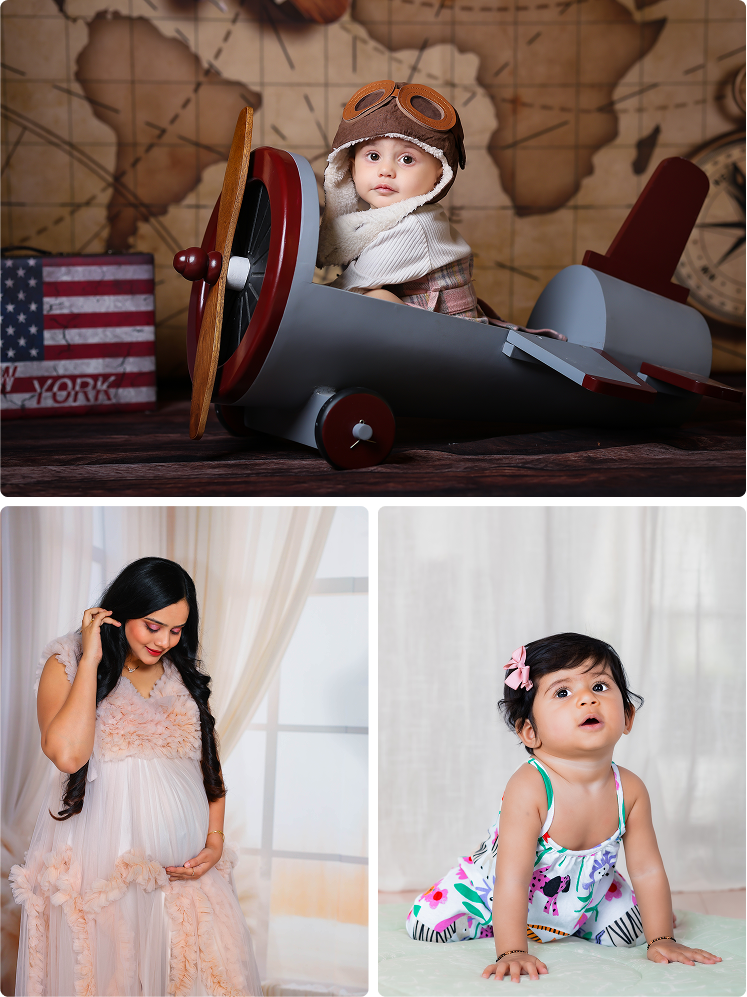
It can feel as though your child has changed overnight. The baby who once needed help with everything is suddenly reaching for toys, trying to walk, speaking new words or insisting on doing things independently.
You may remember a particular morning when your child first smiled at you, the way they held your finger as a newborn or the little routine that made them laugh every evening. At the time, these moments might have seemed like ordinary parts of family life. Looking back, they can feel surprisingly precious.
Childhood often feels fast because change happens gradually, while our memories tend to preserve only selected details. Daily routines become familiar, new skills appear one after another, and parents are busy caring for their children as they grow.
Understanding this can help families appreciate the present without feeling pressured to record every moment. It can also explain why photographs, family stories and small keepsakes become meaningful ways to revisit the early years.
Why Does Childhood Seem to Pass So Quickly?
There is no single reason childhood can feel as though it passes quickly. Several everyday experiences contribute to that feeling.
Everyday routines become part of normal life
In the early months, parents may notice every new expression, movement and sound. As routines develop, feeding, playing, getting dressed and bedtime become familiar parts of the day.
These routines are important, but familiarity can make individual moments less noticeable.
You might not realize that your child has stopped reaching for your hand to walk across the room until you remember how recently they needed that support.
The change happened in small steps. You were simply busy living through them.
Children develop new skills one step at a time
A baby does not suddenly become a toddler in a single day. There are gradual changes in movement, communication, curiosity and independence.
A child might begin by watching other children play, then try to join them. A few months later, they may have favorite games, recognizable preferences and their own ways of expressing feelings.
Each stage brings something new while quietly replacing parts of the previous one.
Photographs can help families look back at these differences, especially when they are collected across several stages rather than viewed individually.
Parents experience many changes at once
Childhood is not the only thing changing. Parents are also adjusting to new responsibilities, work schedules, family routines and their own experiences of parenthood.
When much of the day is spent preparing meals, settling a baby, organizing childcare or managing work, it can be difficult to notice every small change.
This is normal. Parents do not need to remember every detail perfectly to have a meaningful relationship with their children.
Sometimes, a photograph or a story from another family member brings a forgotten moment back into focus.
The Little Things You May Not Notice Until Later
Major milestones are easy to recognize. First steps, first words, birthdays and school beginnings often come with photographs and celebrations.
But the smaller details can also become meaningful.
Think about the everyday things that make your child recognizable at a particular age:
- The way they fall asleep against your shoulder.
- A favorite toy they carry everywhere.
- The funny expression they make when tasting something new.
- The way they reach for a parent when they feel uncertain.
- The songs they want to hear repeatedly.
- Their favorite place to sit or play.
- The little words or phrases they use.
- The way they interact with siblings or grandparents.
These details may not seem important enough to document at the time. Yet they can help you remember what daily life actually felt like.
You do not need a professional camera to preserve them. A quick phone photograph, a short video, or a note written at the end of the day can be enough.
Why Ordinary Family Moments Deserve Attention
Parents often take photographs for special occasions because these events have a clear date and purpose.
However, a family album made only of birthdays, holidays and posed portraits may leave out much of everyday life.
Consider photographing a familiar bedtime routine, a weekend breakfast, a walk with grandparents or a child concentrating on a favorite activity.
These moments help show not only how your child looked, but also how your family spent time together.
They can also provide context when you look back later. A photograph of a child playing in the living room may remind you of a home you no longer live in or a toy that has long since been put away.
The aim is not to make every ordinary moment special. It is to recognize that ordinary life is where much of childhood takes place.
How Photographs Help You See the Changes
Memory is not a perfect recording of the past. We remember some experiences clearly, while other details become less accessible over time.
Photographs provide visual reminders that can help families revisit particular stages.
A picture taken when your baby was three months old may look very different from one taken at nine months. When placed side by side, the changes in expressions, posture, size and interaction may become easier to notice.
A simple way to do this is to create a small collection of photographs from different stages:
- A photograph from the newborn period.
- One showing an early smile or interaction.
- A picture from when your baby begins sitting or moving around.
- A photograph showing a favorite activity.
- A family portrait from the first birthday.
- An everyday photograph that captures your child’s personality.
Choose images that represent different parts of your child’s life rather than collecting many nearly identical pictures.
If you want to document early milestones, a newborn photography session can preserve those first days, while a later baby photoshoot can capture changing expressions, movement and personality.
The value comes from the collection over time, not from photographing every milestone professionally.
Why Parents Should Be in the Photographs Too
One detail families sometimes overlook is the importance of including parents in photographs.
When a parent is usually behind the camera, the family collection may contain hundreds of pictures of the child but very few showing who was there with them.
Years later, children may appreciate seeing how their parents held them, played with them, comforted them or celebrated ordinary moments together.
These photographs do not need to be perfectly styled.
Ask another family member to take a picture occasionally. Use a phone timer for a family photograph. Include grandparents, siblings and other important people in your child’s life.
A professional family-inclusive session can also help when you want photographs of everyone together. The GigglesandGrins baby photoshoot page provides information about sessions that can include parents and family members, depending on the selected package.
The goal is to create a more complete record of childhood, not just a collection of portraits of one person.
How to Preserve Childhood Memories Without Photographing Everything
Trying to record every moment can quickly become exhausting. It can also distract you from enjoying the experience itself.
A simpler approach is to build a small, manageable habit.
1. Choose one meaningful moment each week
Instead of taking photographs constantly, choose one moment that represents the week.
It could be an activity your child enjoyed, a new expression or a quiet moment together.
You can take more photographs whenever you want, but a small weekly habit makes documentation easier to maintain.
2. Add a short note
A photograph cannot always explain what happened before or after it was taken.
Add a simple caption such as:
“You wanted to carry your little backpack everywhere this week, even when we were staying at home.”
Include the date if you know it. Over time, these small notes can become a record of your child’s changing interests and routines.
3. Create a folder for each year
Organize selected photographs into yearly folders, or use monthly folders during the first year if you take many pictures.
Back up important images in a second location, such as a separate drive or a reliable cloud service. This reduces the risk of losing meaningful photographs if a device is damaged or replaced.
4. Print a few favorites
Digital photographs are convenient, but printing selected images gives you another way to revisit them.
A small album, framed family photograph or printed milestone collection can be shared without opening a phone or scrolling through thousands of files.
You do not need to print everything. Choose photographs that represent meaningful people, stages and experiences.
5. Revisit the photographs together
As your child grows, look through photographs together and talk about what was happening.
Tell them who was present, where the family lived and what they enjoyed at that age.
Children may ask questions or remember events differently from their parents. Let the conversation develop naturally rather than expecting them to respond in a particular way.
Why Milestone Celebrations Can Become Family Memories
Birthdays, naming ceremonies, family gatherings and other milestones give families opportunities to pause and recognize change.
These occasions are not important only because they create photographs. They can also bring relatives together, establish traditions and give families time to celebrate a child’s growth.
A first birthday, for example, may involve familiar faces, favorite songs, a special cake and a gathering that becomes part of the family’s shared history.
If you are planning a celebration, a birthday photoshoot can help document the occasion. But remember that a few candid photographs of family members interacting can be just as useful as formal portraits.
The purpose is to preserve what made the occasion meaningful to your family, not to create a perfect event for the camera.
Make Room for the Present, Not Just the Memories
There is a balance between documenting childhood and being present for it.
If you spend an entire outing trying to capture the perfect photograph, you may miss the experience you wanted to remember.
It is perfectly reasonable to put the camera away.
Play with your child. Listen to their stories. Let them explore an activity. Enjoy a family meal without feeling that it needs to be documented.
You can take a few photographs afterward or ask another family member to capture a moment occasionally.
Not every meaningful experience needs visual proof. Your relationship with your child is built through everyday care, attention and shared experiences, whether or not a camera is involved.
When Professional Photography Can Be Helpful
Phone photographs are excellent for everyday memories. Professional photography can offer something different: planned portraits, thoughtful lighting, a consistent style and photographs that include family members who are often behind the camera.
It may be especially useful when you want to mark a particular stage, create a family portrait or preserve a milestone with a little more preparation.
For example, some families choose a newborn session, return for baby milestone photographs and arrange a birthday session later. Others prefer a single session when a particular occasion feels important.
There is no required schedule. The right choice depends on your preferences, budget and the moments you want to preserve.
If you are expecting a baby, a maternity photoshoot can document the period before your child’s arrival, creating another chapter in your family’s visual story.
Professional photography should complement everyday family photographs, not replace them or create pressure to book a session at every stage.
A Simple Childhood Memory Checklist
If you want to begin preserving memories without making it another demanding task, start with this checklist:
- Take occasional photographs of everyday routines.
- Include yourself and other important family members.
- Record a short caption when a moment has a story behind it.
- Save photographs in organized folders.
- Back up the images you would be upset to lose.
- Print a few meaningful photographs each year.
- Keep small mementos when they have genuine significance.
- Revisit family photographs and tell the stories behind them.
- Put the camera away when you would rather enjoy the moment.
You do not need to complete every item immediately. Choose one habit that fits your family and build from there.
Frequently Asked Questions
Why does childhood feel like it passes so quickly?
Children change through many small developmental stages, while parents are busy managing everyday responsibilities. Familiar routines can make gradual changes less noticeable until a photograph or memory highlights how much has changed.
What childhood moments should parents photograph?
Consider capturing milestones, family interactions, favorite toys, everyday routines, changing interests and moments that show your child’s personality. The most useful photographs are not necessarily the most posed or elaborate.
How can I preserve childhood memories without taking too many photographs?
Choose a few meaningful images, add short captions, organize them by year and back up the files. A small, thoughtfully maintained collection can be more useful than thousands of unorganized photographs.
Are professional photos necessary to preserve childhood?
No. Phone photographs and family videos are valuable ways to document daily life. Professional photography is an optional way to create planned portraits and include people who might otherwise be missing from the pictures.
When should I start documenting my child’s childhood?
You can start at any stage. If your child is already older, everyday photographs, family stories and conversations about past experiences can still help you build a meaningful collection.
Final Thoughts
Childhood does not disappear all at once. It changes through small developments that happen while families are busy living their everyday lives.
A favorite toy is replaced by a new interest. A familiar routine changes. A child who once needed help begins doing things independently. These changes are natural, but they can be difficult to appreciate when they happen gradually.
You do not need to hold on to every moment or turn family life into a photoshoot. Instead, pay attention to the details that matter to you, record a few stories, include the people who are part of your child’s life and keep the photographs you will want to revisit.
Years from now, a simple picture may remind you of a voice, a habit, a favorite game or a stage of life you had almost forgotten.
The aim is not to stop childhood from changing. It is to give yourself meaningful ways to remember the journey while you are still living it.