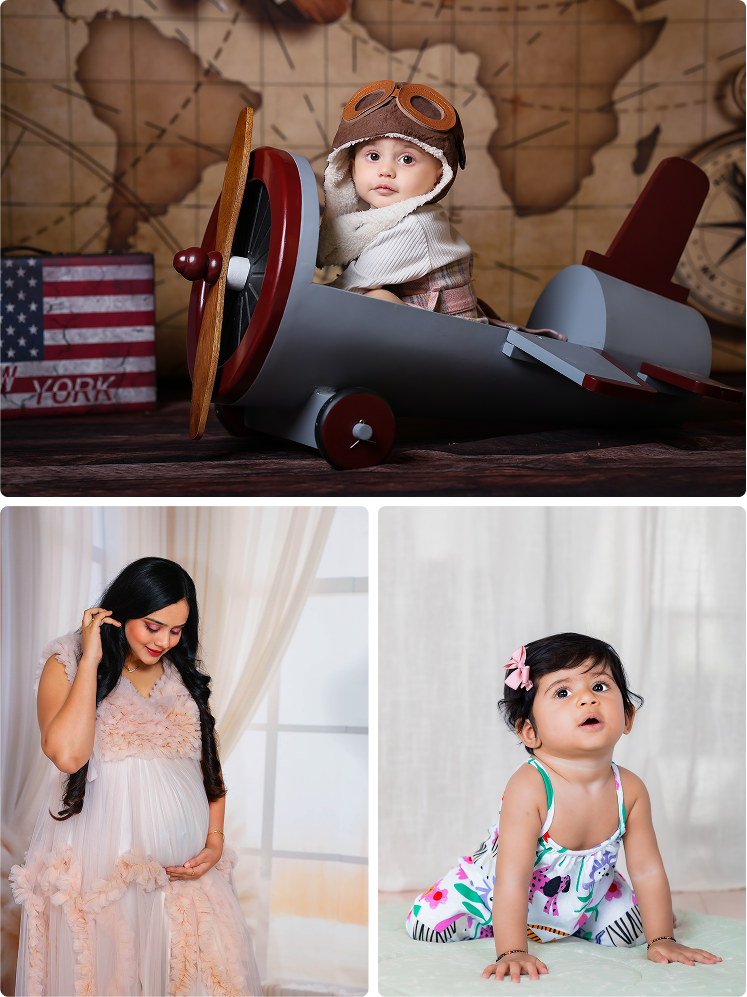
A baby photo may look like a simple picture at first glance. A tiny hand wrapped around a parent’s finger, a sleepy newborn lying peacefully, a first smile, a messy mealtime or a child laughing at something only they understand.
But years later, that same photograph can mean much more.
It may remind parents of how small their child once was. It may bring back the sound of a particular laugh, the feeling of holding a newborn or a funny incident that happened just before the camera clicked. For grandparents, it can become a connection to a stage of their grandchild’s life they may not have witnessed every day.
That is the story behind every baby photo.
The value of a photograph is not always in how perfect it looks. Often, it is in what happened around the moment it captured.
Why a Baby Photo Is More Than a Picture
Photography freezes a visual moment, but families often attach much more information to that moment.
A photograph of a three-month-old baby sleeping may also represent the exhausting nights the parents had experienced, the relief of finally seeing their baby peacefully asleep, or a quiet afternoon that felt ordinary at the time.
A picture of a baby’s first birthday may remind the family about the preparations, the people who attended, the cake that ended up everywhere and the excitement of seeing the child react to everything around them.
The photograph becomes a visual trigger for those memories.
This is why baby photo memories can become increasingly meaningful as children grow. The child changes, routines change and everyday details become harder to remember. Photographs can help families revisit those stages.
The Story Often Begins Before the Camera Clicks
One of the most interesting things about baby photography is that the visible moment is often only a small part of the story.
Consider a photograph of a newborn peacefully sleeping.
The image might show a calm baby wrapped comfortably in a blanket. What it does not show is everything that happened before the photograph—the feeding, settling, comforting and patience that allowed the moment to happen.
Similarly, a smiling baby photograph may look spontaneous, but the smile could have been encouraged by a parent’s voice, a familiar face or a favorite toy just outside the frame.
The photograph captures the result.
The family remembers the story.
That context is what can make an ordinary photograph emotionally significant years later.
Everyday Baby Moments Can Become Important Memories
Parents naturally pay attention to major milestones.
The first smile.
The first steps.
The first birthday.
The first tooth.
The first time a baby says a particular word.
These moments are worth documenting, but childhood memories are not made only from milestones.
Some of the most meaningful photographs may come from ordinary routines.
A baby falling asleep on a parent’s shoulder.
Tiny feet resting against a parent’s hand.
A child playing with the same toy every morning.
A messy face after eating.
A grandparent holding the baby.
Siblings sitting beside a newborn.
A child discovering something for the first time.
These moments may not seem extraordinary when they happen. Yet they can become valuable reminders of what everyday life looked like during a particular stage of childhood.
This is an important part of documenting a baby’s childhood: you do not have to photograph only the “big” moments.
A Photograph Can Preserve Relationships, Not Just Faces
Baby photography is often associated with portraits of the baby, but relationships are an equally important part of the story.
A photograph of a newborn by themselves tells us what the child looked like.
A photograph of that newborn being held by a parent tells us something else.
It shows connection.
The same is true of photographs with grandparents, siblings and other important family members.
A baby’s photograph can therefore become part of the family’s visual history.
Years later, a child may look at an old photograph and ask:
“Who was holding me?”
“Where was this taken?”
“What was I like when I was little?”
“What did Grandma look like then?”
“Did I really sleep like that?”
Those questions create opportunities for family storytelling.
The photograph becomes the starting point for a conversation.
The Details You Notice Later Can Be Surprisingly Small
One reason old baby photographs become interesting is that people often notice details they did not appreciate when the picture was originally taken.
Perhaps the baby is wearing a particular outfit.
Maybe there is a favorite toy in the background.
Perhaps the photograph was taken in the family’s first home.
Maybe a grandparent’s hands are visible.
There could be a piece of furniture that no longer exists.
A familiar blanket might appear in several photographs.
Even the room itself can become part of the memory.
These details help reconstruct what life looked like during a particular period.
That is why meaningful baby photos do not necessarily need elaborate setups. Sometimes the surrounding details contribute as much to the story as the baby does.
The First Year Is Full of Changing Stories
A baby’s first year can feel like one continuous period of change.
The newborn stage gradually becomes a more alert stage. Expressions become more varied. Babies begin interacting with their surroundings, sitting, crawling, standing and eventually taking their first steps.
Their personality also begins to become increasingly recognizable.
Photographs taken at different stages can show these changes.
A collection of baby photographs can therefore tell a larger story than one individual portrait.
For example:
Newborn: tiny, sleepy and dependent.
Three months: more alert and responsive.
Six months: interacting with people and surroundings.
Nine months: exploring and becoming increasingly mobile.
One year: showing a much stronger personality and independence.
The purpose is not to photograph every day or create hundreds of nearly identical pictures. A small collection of thoughtfully chosen photographs can document meaningful changes over time.
Why Candid Baby Photos Can Be So Meaningful
Posed portraits have their place, especially when families want beautiful photographs to display or preserve.
But candid photographs can capture another side of childhood.
A baby’s unexpected expression.
A parent’s reaction.
A sibling trying to make the baby laugh.
A child concentrating on a toy.
A sleepy moment after feeding.
A burst of laughter.
These photographs can feel connected to real life because they show interaction rather than simply appearance.
The best collection of family photographs does not necessarily need to choose between posed and candid photography.
Both can tell different parts of the story.
Professional Baby Photography Adds Another Perspective
Parents already take thousands of photographs on smartphones, and those everyday pictures are valuable.
Professional photography does not need to replace them.
Instead, it can complement them.
A professional baby photographer can pay attention to elements such as lighting, composition, expressions, perspective and the relationship between family members. This can help create photographs that are intentionally made rather than simply captured because a phone happened to be nearby.
Professional photography can also give parents an opportunity to be included in photographs with their children.
This matters because the person taking most of the everyday photographs is often missing from them.
A child may eventually have hundreds of photographs of themselves and surprisingly few photographs showing the people who were raising them.
A thoughtful professional session can help create a more complete family record.
The Story Is Sometimes More Important Than Perfection
There can be pressure to create the “perfect” baby photograph.
Perfect smile.
Perfect outfit.
Perfect background.
Perfect pose.
But childhood itself is rarely perfect.
Babies move.
They cry.
They get distracted.
They make unusual expressions.
They fall asleep at unexpected times.
They refuse to cooperate.
Those moments are part of their personalities and the reality of family life.
A photograph does not have to look like an advertisement to become meaningful.
Sometimes an imperfect expression is the photograph parents eventually love the most because it feels unmistakably like their child.
Write Down the Story While You Still Remember It
One simple way to make baby photographs more meaningful is to record the story behind selected images.
The note does not have to be long.
For example:
“Six months old. You had just discovered how to clap and spent the entire afternoon trying to get everyone to copy you.”
Or:
“Taken on a Sunday morning at home. You were fascinated by the sunlight coming through the window.”
A short note can add context that the photograph itself cannot communicate.
Over time, these captions can become part of a baby memory book or family photo album.
This is especially useful because memories of everyday childhood can become less precise as years pass.
Printed Photos Can Give These Stories a Physical Place
Digital photographs are convenient, searchable and easy to share. They are an important part of modern family memory keeping.
But selected photographs can also be printed.
A printed photo placed in an album can be viewed away from a phone screen. Parents can add handwritten notes, dates or small stories beside it.
A child can eventually turn the pages themselves.
Grandparents can look through the album.
Family members can talk about photographs together.
A digital archive preserves files.
A physical album can become an object that the family interacts with.
Both approaches can work together.
The important thing is not whether every photograph gets printed. It is choosing the photographs and stories that matter enough to preserve in a more permanent form.
Include the People Behind the Memories
When documenting a baby’s childhood, parents sometimes focus so heavily on the baby that they forget to photograph themselves.
Try occasionally turning the camera toward the people who are part of the child’s everyday life.
Parents.
Grandparents.
Siblings.
Caregivers.
Close family members.
These photographs help answer an important question later:
Who was there during my childhood?
A baby photograph becomes more powerful as part of a larger family story.
You Don’t Need to Photograph Everything
Documenting childhood does not mean turning every day into a photoshoot.
In fact, constantly trying to capture everything can make photography feel like a task.
Instead, consider choosing moments that genuinely matter to your family.
You might photograph:
- Important milestones
- Favorite everyday routines
- Family relationships
- Changing expressions
- Special celebrations
- Favorite toys or objects
- Places that are meaningful to your family
- Ordinary moments that you want to remember
- Different stages of your child’s personality
The goal is not to create the largest possible photo collection.
It is to create a collection that still tells a story years later.
Let Your Child Become Part of the Story
As children grow, they can eventually participate in preserving their own memories.
Ask them which photographs they like.
Let them choose pictures for an album.
Write down what they remember about a particular event.
Ask questions about photographs from earlier years.
This can turn photography into family storytelling rather than simply an archive.
A photograph may show one version of an event, while the child may remember something completely different about it.
Both perspectives can become part of the family’s history.
What Makes a Baby Photo Truly Meaningful?
There is no single formula.
A meaningful baby photograph might be technically perfect, or it might be completely spontaneous.
It might show a milestone, or it might show an ordinary Tuesday morning.
It might feature the baby alone, or it might focus on the relationship between the baby and someone they love.
What matters most is the connection between the photograph and the life surrounding it.
A useful way to think about it is:
Photograph + Context + People + Memory = Story
The photograph gives you the visual moment.
The context explains when and where it happened.
The people give it emotional meaning.
The memory brings the entire moment back to life.
Creating a Collection That Tells Your Baby’s Story
Instead of thinking about individual photographs separately, try looking at your child’s photographs as a collection.
Choose images that show different sides of childhood.
A quiet newborn portrait. A parent holding the baby. A favorite toy. A funny expression. A family gathering. A milestone. An everyday routine. A photograph with grandparents. A moment of genuine laughter. A first birthday.
Together, these images can tell a much richer story than a collection made entirely of posed portraits.
And years later, the value of that collection may have less to do with photographic perfection and more to do with the life it represents.
Final Thoughts
Every baby photo has a story, even when the story is not immediately visible.
Behind a sleepy newborn portrait may be a night of feeding and comforting. Behind a baby’s first smile may be a parent’s voice. Behind a family photograph may be months of waiting to meet the newest member of the family.
The camera captures the image.
The family gives it meaning.
That is why documenting childhood does not have to be about photographing everything. It is about noticing the moments, relationships and small details that you may want to remember later.
Take the photographs that feel meaningful to you. Keep the stories behind them. Include the people who matter. Print a few favorites if you can. And leave room for ordinary moments alongside the major milestones.
Because years from now, you may not remember exactly why a particular photograph seemed important when you took it.
But when you see it again, the story may come back.
And sometimes, that is what makes a baby photo more than just a picture.