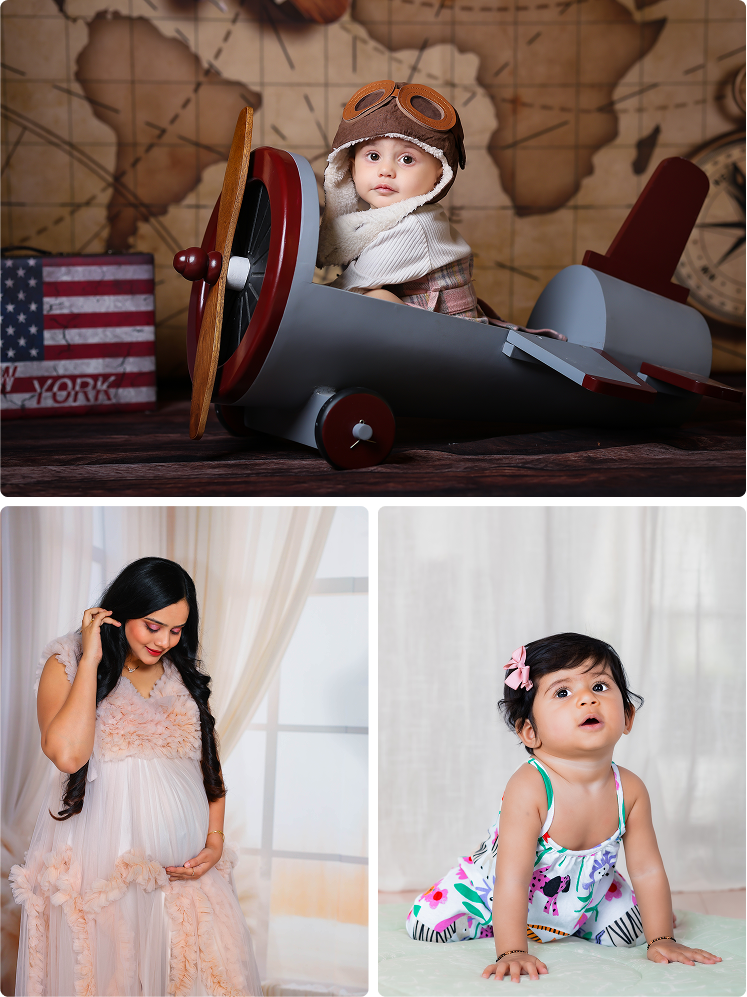
A baby portrait can be simple and still feel extraordinary. Sometimes, it is the soft light falling across a baby’s face, a curious expression, tiny fingers holding a parent’s hand, or a clean background that makes the photograph memorable.
Magazine-quality baby portraits are not created by expensive equipment alone. They are the result of thoughtful planning, an understanding of light, careful composition, suitable styling, patience, and editing that enhances the image without making the baby look unnatural.
For parents planning a professional baby photoshoot, understanding this process can help set realistic expectations and make it easier to choose a photography style that suits their family.
At GigglesandGrins, the aim of a baby portrait session is to combine visual quality with the expressions, details, and moments that make every child unique.
What Makes a Baby Portrait Look Magazine-Quality?
Magazine-inspired photography often has a clear visual style. The subject stands out, colours work well together, lighting feels intentional, and the composition guides the viewer’s attention towards the baby’s expression.
This does not mean every portrait needs elaborate props, dramatic lighting, or a fashion-style setup. A minimalist photograph with natural expressions can look just as polished as a carefully styled studio portrait.
Several elements work together to create the finished image:
- Lighting: Soft, balanced light that brings out facial details.
- Composition: Thoughtful placement of the baby within the frame.
- Styling: Outfits, colours, and props that complement rather than distract.
- Timing: Capturing natural expressions and comfortable moments.
- Background: A setting that supports the subject without competing for attention.
- Editing: Consistent colour, balanced exposure, and realistic skin texture.
The strongest portraits bring these elements together while keeping the baby’s comfort at the centre of the experience.
1. Planning the Concept Before the Photoshoot
A polished portrait usually begins before the camera comes out. Photographers consider the desired look, the baby’s age and personality, the location, the available light, and the family’s preferences.
Some parents prefer a classic portrait with a neutral background. Others may want a colourful theme, a traditional outfit, or a photograph that includes parents and siblings.
Planning helps the photographer make practical decisions about the setup and avoid adding unnecessary details.
Before the session, parents can share reference images, preferred colours, clothing ideas, and any specific moments they want captured. Reference photographs are useful for communicating a general style, but the goal should be to create images suited to the individual baby rather than copy another child’s pose or appearance.
A simple concept often works best. When the styling has a clear purpose, the baby’s face and expressions remain the main focus.
2. Using Light to Bring Out Natural Features
Lighting is one of the most important parts of portrait photography. It influences skin tones, shadows, depth, and the overall mood of the photograph.
Professional photographers may use window light, studio lights, reflectors, or a combination of sources depending on the setting and desired result.
Soft light can help create gentle transitions between highlights and shadows. It can also reduce harsh contrasts that distract from a baby’s expression. Photographers adjust the direction and intensity of the light to suit the baby’s position and the look they want to achieve.
For example, light coming from one side can add dimension to a portrait, while more even lighting may create a bright, classic appearance. The background and the baby’s clothing also affect how the final image looks.
Good lighting does not need to be dramatic. It needs to be controlled, comfortable, and appropriate for the photograph.
Parents can explore professional baby photoshoot options to see different studio and themed photography styles before deciding what they prefer.
3. Choosing the Right Background, Colours, and Props
A background can make a portrait feel elegant, playful, modern, or traditional. The important thing is that it complements the baby instead of drawing attention away from them.
Neutral backgrounds, soft textures, and restrained colour palettes are often useful for timeless portraits. Bright colours and themed backdrops can work beautifully when the aim is to create a more playful image.
Photographers also consider how clothing and props work together. Too many competing colours or decorative elements may make the photograph feel crowded. A coordinated outfit and one or two meaningful props can create a more balanced result.
Props should always be appropriate for the baby’s age, stable, and safe to use. Any item that is unstable, has small detachable parts, or creates discomfort should be avoided.
A good styling decision is not necessarily the most elaborate one. It is the one that supports the idea of the portrait and keeps the baby comfortable.
4. Creating Natural Poses and Capturing Expressions
Magazine-inspired portraits may look carefully arranged, but the best baby photographs still need to reflect the child’s comfort and natural behaviour.
Babies cannot be expected to hold a pose or smile on demand. Their expressions can change in seconds, and they may need time to settle, feed, rest, or interact with a parent.
An experienced photographer watches for natural moments such as a curious glance, a spontaneous smile, a stretch, or a relaxed interaction with a familiar person. For posed portraits, the photographer should use age-appropriate positions and provide proper support whenever needed.
Parents can help by bringing familiar essentials and sharing what usually comforts their baby. If a child becomes tired or unsettled, taking a break is more important than completing a particular pose.
For newborns in particular, safety must take priority over the visual result. Never attempt unsupported or complex poses at home based on a photograph. Some images seen in professional portfolios may involve careful support or compositing techniques that are not obvious in the final image.
5. Paying Attention to Composition and Small Details
Composition refers to how the elements of a photograph are arranged within the frame. It determines what the viewer notices first and how the image feels as a whole.
Photographers may use close-up framing to highlight eyelashes, tiny hands, or a baby’s expression. Wider compositions can include the setting, outfit, or interaction with family members.
They also look for small distractions, such as a twisted collar, an awkwardly placed prop, a background edge crossing the baby’s head, or an unnecessary object in the frame.
Small adjustments to camera position, the baby’s clothing, or the arrangement of props can make a meaningful difference. The aim is not to make the baby appear perfect, but to present the moment with clarity and intention.
A variety of photographs can also make the final collection more useful: a close-up portrait, a full-length image where appropriate, a candid expression, and a family photograph may each tell a different part of the story.
6. Professional Editing That Still Looks Natural
Editing helps transform selected photographs into a consistent final collection. Photographers may adjust exposure, white balance, colour, contrast, cropping, and minor distractions.
The purpose of editing is to refine the image, not to erase the baby’s natural features. Over-smoothing skin, changing facial proportions, or applying heavy filters can make a portrait look artificial.
In baby photography, realistic skin texture and natural colour are especially important. Minor temporary marks may be handled according to the photographer’s editing style and the parents’ preferences, but the final image should still look like the child.
Editing also helps photographs from the same session feel visually consistent. This can be especially useful when parents want to create a printed album or display several portraits together.
Read more about why professional editing matters in baby and maternity photography for a closer look at this stage of the process.
7. Making the Experience Comfortable for Babies and Parents
A beautiful portrait depends on more than camera settings. The experience itself matters, particularly when working with babies who may need frequent breaks or reassurance.
A baby-friendly session should allow time for feeding, changing, cuddling, and settling. Parents should feel comfortable communicating when their child needs a pause.
Before booking, ask the photographer how they handle unsettled babies, what safety practices they follow, which props are available, and how much time is set aside for the session.
It is also helpful to discuss the expected number of edited photographs, delivery timelines, print options, and any additional charges in advance.
If you are comparing studios, review their portfolios for consistency, natural expressions, lighting, editing style, and examples of babies at an age similar to your child’s. You can use this guide on choosing the right baby photographer in Bangalore to prepare questions before making a decision.
8. Preparing for a Magazine-Inspired Baby Photoshoot
Parents do not need to manage every photography detail themselves. A few simple preparations can help the session run more comfortably.
Choose a clear style. Decide whether you prefer a classic portrait, a themed setup, a lifestyle session, or a combination.
Select comfortable clothing. Choose outfits that fit well and allow your baby to move naturally. Coordinate colours if parents or siblings will be included.
Bring familiar essentials. Diapers, feeding supplies, a change of clothes, and a favourite comfort item can be useful.
Plan around your baby’s needs. Consider usual sleep and feeding patterns, while remaining flexible if the day does not go as expected.
Keep expectations realistic. Your baby may not smile in every photograph, and the session may not follow the exact plan. Natural expressions and relaxed family moments can be just as valuable as posed portraits.
Think about how you will use the photographs. If you want to frame an image, create an album, or display a portrait on a wall, tell the photographer. This can help guide framing, orientation, and image selection.
Frequently Asked Questions
Do magazine-quality baby portraits require an expensive studio?
Not always. A well-lit home or outdoor setting can produce beautiful portraits when the lighting, background, and composition are suitable. A studio offers greater control over the environment and can make certain styles easier to achieve.
What should my baby wear for a professional portrait?
Choose comfortable clothing that suits the style you want. Simple outfits and coordinated colours can help keep attention on the baby’s expression, while themed clothing may be appropriate for milestone or birthday sessions.
How much editing should a baby portrait have?
Editing should improve lighting, colour, composition, and minor distractions while preserving the baby’s natural appearance. If you prefer minimal retouching, discuss that with your photographer before the session.
Can a fussy baby still have a successful photoshoot?
Yes. Babies do not need to smile continuously for a session to produce meaningful photographs. Breaks, soothing, familiar interactions, and flexible timing can help the photographer capture a range of natural expressions.
How do I know if a photographer’s style suits my family?
Review a range of complete galleries rather than relying on one standout image. Look for consistent lighting, natural-looking edits, comfortable baby positioning, and a style you would enjoy seeing in your home or family album.
Final Thoughts
Magazine-quality baby portraits are created through a combination of planning, light, composition, styling, timing, and thoughtful editing. Professional techniques help bring these elements together, but the baby should always remain more important than the setup.
When choosing a photographer, look beyond elaborate backdrops and heavily edited sample images. Pay attention to the way babies are handled, whether expressions look natural, and whether the finished photographs match the style you genuinely love.
At GigglesandGrins, parents can explore different baby photography options and discuss the kind of portraits they want to preserve. A carefully planned session can deliver polished photographs while keeping the experience relaxed, safe, and personal.