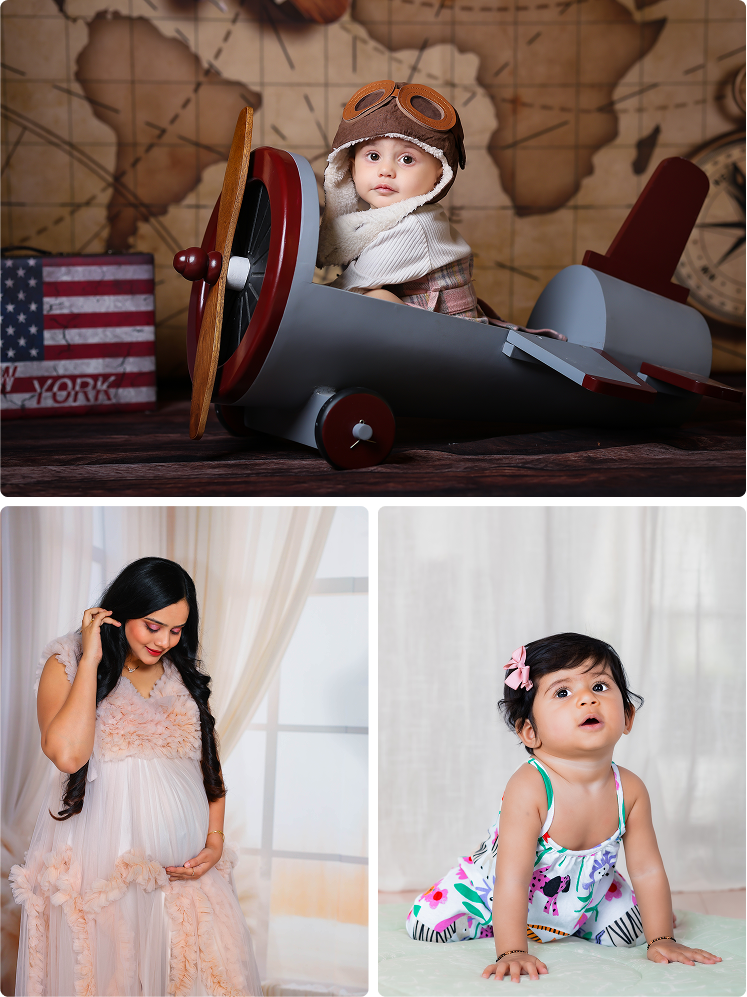
Children gradually develop an understanding of who they are through their relationships, experiences, family stories, culture, and everyday interactions. As they grow, they begin asking questions about themselves and their past: What was I like as a baby? Where did we live before? Who was there when I was born? What did our family do together?
Photographs can become part of those conversations.
A family photo is more than an image saved on a phone or displayed in an album. When parents look at photographs with their children and talk about the people, places, experiences, and emotions behind them, those images can become a way of connecting children with their personal and family history.
Photos alone do not determine a child’s identity. However, when combined with conversations, relationships, and real experiences, they can provide children with visual reminders of where they have come from and the people who have been part of their lives.
What Does a Sense of Identity Mean for a Child?
A child’s sense of identity develops over time. It includes their understanding of themselves, their relationships, their family, their experiences, their interests, and the communities and cultures they belong to.
For a young child, identity may begin with relatively simple ideas:
- “This is me.”
- “These are my parents.”
- “This is my brother.”
- “This is my grandmother.”
- “We used to live here.”
- “This is what we did when I was little.”
As children grow older, these ideas become more complex. They begin connecting different experiences and relationships into a broader understanding of their personal story.
Family photographs can provide some of the visual material children use when talking about that story.
How Photos Help Children Understand Their Personal History
Young children cannot remember every stage of their early lives. In fact, many experiences from infancy and early childhood will not remain as conscious memories.
Photographs can help parents introduce those earlier experiences through storytelling.
For example, a parent might show a child a photograph from their first birthday and explain:
“You loved playing with this little toy on your birthday. Grandma came to visit us that day.”
The photograph gives the child something concrete to look at while hearing the story.
Over time, children may begin recognizing recurring people, places, activities, and events in their photographs. These images can help them connect different parts of their childhood story.
The important part is not simply having the photograph. The conversation surrounding the photograph is what gives it meaning.
Photos Can Strengthen a Child’s Sense of Belonging
Children generally learn about family relationships through everyday interactions. Photographs can reinforce those connections by showing children that they have been part of a larger family story.
Looking through an album might reveal:
- Parents holding their newborn
- Grandparents visiting
- Siblings meeting for the first time
- Family celebrations
- Festivals and cultural traditions
- Holidays and trips
- Ordinary family activities
- Special milestones
- Time spent with relatives
When parents explain who people are and what was happening, children can begin to understand their relationships within the family.
This can contribute to a sense of belonging: “I am part of this family, and I have a story within it.”
Family Photos Can Help Children Ask Questions
One of the most useful things about photographs is that they naturally invite questions.
A child looking at an old photograph may ask:
- “Where were we?”
- “Who is that?”
- “Why was I wearing that?”
- “Was I really that small?”
- “Why was everyone laughing?”
- “Where is this place?”
- “What happened next?”
These questions create opportunities for parents to share stories.
Instead of simply telling children about their childhood, parents can allow photographs to become conversation starters.
A single photograph might lead to a story about a family trip, a grandparent, a festival, a previous home, or an important event.
That storytelling can help children build a richer understanding of their personal history.
Photos Can Connect Children With Family Traditions
Identity is also influenced by family traditions and cultural experiences.
Photographs of celebrations, festivals, ceremonies, family gatherings, traditional clothing, foods, and everyday customs can help children see how different experiences fit into their family story.
For example, parents might show photographs from several years of the same festival and talk about how the family celebrates it.
Children can see:
- How they have grown
- How family members have changed
- Which traditions have continued
- Which traditions have evolved
- Who participates in family celebrations
These photographs can become visual records of family traditions rather than simply collections of posed pictures.
Looking at Older Photos Helps Children Notice How They Have Grown
Children often enjoy seeing photographs of themselves when they were younger.
A toddler may be fascinated by seeing themselves as a baby. An older child may laugh at an old hairstyle, favorite outfit, or birthday cake.
These comparisons can help children recognize change over time.
They may notice:
- “I was so small.”
- “I didn’t have teeth yet.”
- “My hair was different.”
- “I used to sleep in that room.”
- “That’s my old toy.”
- “You carried me everywhere.”
These observations can help children understand that they have a personal history and that their experiences have changed as they have grown.
Photos Can Show Children That Ordinary Moments Matter
Parents often think photographs need to document major milestones.
Birthdays, vacations, festivals, and celebrations are certainly meaningful, but everyday photographs can become equally valuable over time.
A photograph of a child reading with a parent, playing with a sibling, visiting grandparents, or sitting at the family dinner table may later become an important part of their childhood story.
These images communicate something simple:
Your everyday life mattered, too.
For children, this can be particularly meaningful because their childhood is made up largely of ordinary moments.
Family Photography Can Include More Than Perfect Moments
A child’s identity should not be built around an unrealistic picture of a perfect childhood.
Families experience ordinary days, celebrations, changes, challenges, laughter, tiredness, and countless small moments in between.
Parents do not need to create a perfectly curated photographic record.
Authentic photographs can sometimes be more meaningful because they reflect real family life.
A messy playroom, a favorite toy, a family meal, a rainy afternoon, or a child laughing with a grandparent may eventually become a valuable reminder of a particular period.
The goal is not to document everything.
It is to preserve meaningful pieces of family life.
How Parents Can Use Photos as Storytelling Tools
Parents do not need complicated activities to make photographs meaningful.
Try setting aside a few minutes occasionally to look through photographs with your child.
Ask open-ended questions such as:
- “What do you remember about this day?”
- “Who do you think is in this picture?”
- “What do you notice?”
- “Do you remember this place?”
- “What do you think happened after this photograph?”
- “Would you like to hear the story behind this picture?”
For younger children, parents can simply identify people and describe what was happening.
For older children, photographs can encourage longer conversations about memories, relationships, family history, and personal experiences.
Create a Photo Timeline of Childhood
A simple chronological collection can help children see their growth over time.
Parents might organize photographs around:
Birth → First Year → Toddler Years → Preschool → Family Celebrations → Holidays → School Years
There is no requirement to create a large printed album.
A digital collection, small photo book, family album, or selected wall photographs can all work.
The important thing is that the photographs are accessible enough for children to revisit them.
Include Different People in the Family Story
When building a collection of childhood photographs, it can be tempting to focus exclusively on the child.
But photographs involving other family members can tell a broader story.
Include photographs with:
- Parents
- Siblings
- Grandparents
- Extended family
- Family friends
- Pets
- Important caregivers
This helps children see relationships as part of their personal history.
For example, photographs with grandparents may become particularly meaningful as children grow older because they preserve visual connections with different generations.
Let Children Participate in Choosing Photos
As children become older, allow them to participate in deciding which photographs matter to them.
You might ask:
“Which three pictures from this year would you like to keep in your album?”
Their choices may surprise you.
Adults often choose photographs because they are technically beautiful or represent an important event. Children may choose a picture because they remember a funny moment, a favorite person, or a beloved toy.
Allowing children to choose photographs also gives them a voice in how their own story is represented.
Don’t Turn Photography Into Pressure
Children do not need to pose for every photograph.
If every family memory becomes a demand to smile, stand still, or look perfect for the camera, photography can become stressful rather than meaningful.
There is value in allowing children to participate naturally.
Sometimes the best photograph is the one taken while a child is:
- Laughing
- Playing
- Reading
- Exploring
- Talking
- Hugging someone
- Concentrating on a favorite activity
The purpose of family photography is not to manufacture a perfect childhood.
It is to preserve pieces of the childhood that actually happened.
Why Professional Childhood Photography Can Be Meaningful
Professional photography can provide a carefully created record of particular stages of childhood.
A professional photographer can help families document milestones, relationships, celebrations, and personalities in a way that complements everyday photographs taken on phones.
For example, parents may choose professional photography for a newborn session, first birthday, family portrait, or another important milestone.
The value is not simply the quality of the camera or editing.
Years later, these photographs can become part of the family’s visual history.
For children, they can provide another way to see themselves within their family story.
Photos Are Only One Part of a Child’s Identity
It is important not to overstate what photographs can do.
A child’s identity develops through relationships, experiences, environment, culture, communication, play, learning, and many other influences.
A photograph cannot create a strong sense of identity on its own.
Its value comes from what surrounds it.
A photograph of a grandparent becomes more meaningful when a parent tells the child who that person was.
A photograph from a family festival becomes more meaningful when the family explains why the celebration matters.
A photograph from infancy becomes more meaningful when parents share the story of that stage of the child’s life.
In other words, photographs can support family storytelling, but relationships and lived experiences remain at the center.
Simple Ways to Make Family Photos More Meaningful
You do not need thousands of photographs.
Try these simple approaches:
- Print a few favorite photographs each year.
- Write a short note about the story behind important pictures.
- Create a small annual family album.
- Include ordinary moments alongside major milestones.
- Keep photographs of important family relationships.
- Look through old photographs together occasionally.
- Let children choose some of their favorite pictures.
- Record children’s memories and comments about older photographs.
- Include cultural and family traditions.
- Keep photographs organized so they can actually be revisited.
How Photos Can Become Part of a Child’s Story
As children grow, their understanding of themselves changes.
A photograph that means very little to a three-year-old may become fascinating to a seven-year-old. An image that seems ordinary during childhood may become deeply meaningful in adulthood.
This is one reason family photographs can become valuable over time.
They create a visual thread between different stages of life.
A child sees a baby photograph and realizes, “That was me.”
They see a picture with their grandparents and remember, “I used to spend time with them.”
They see a family celebration and understand, “This is something our family did together.”
Gradually, individual photographs become pieces of a larger personal story.
Final Thoughts
Photos can give children visual reminders of their early lives, relationships, family traditions, and experiences. When parents combine those photographs with stories and conversations, images can become meaningful tools for exploring family history and a child’s developing sense of belonging.
You do not need to photograph every moment.
Instead, focus on preserving moments that tell something genuine about your family’s life.
A professional photograph, a spontaneous phone picture, an old family album, or a simple printed snapshot can all have value when it helps a child connect with their own story.
Years from now, those photographs may become more than pictures.
They may become part of the way your child understands where they came from, who they grew up with, and the experiences that shaped their childhood.