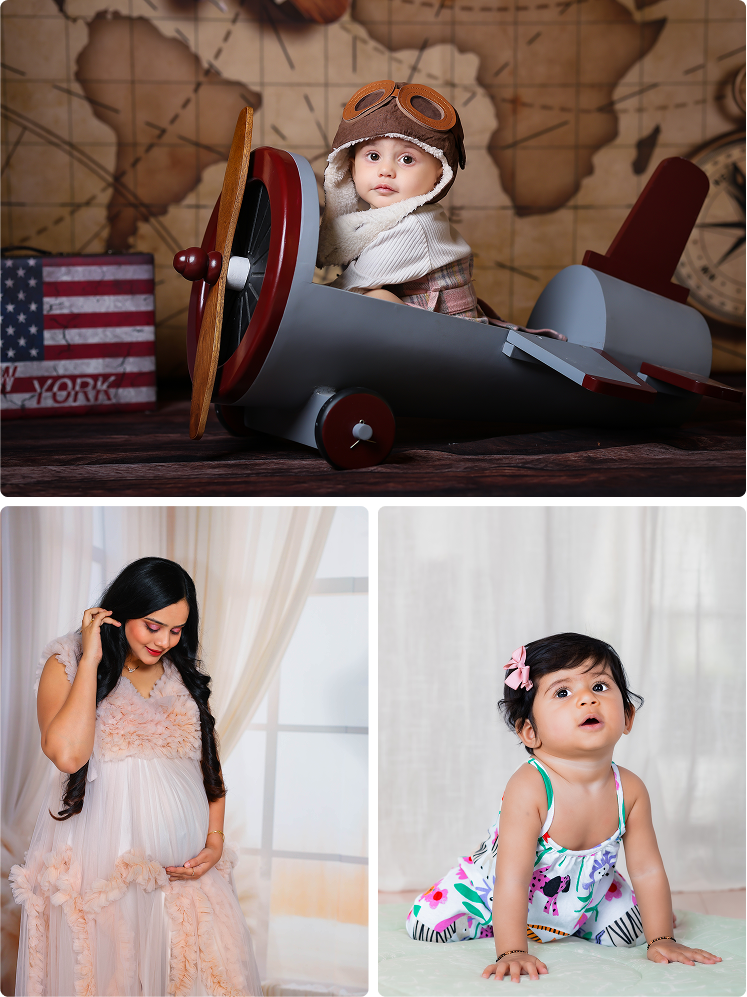
Most families have more photographs than they could possibly look through in a lifetime.
A few taps on a phone can capture a child’s first steps, a birthday celebration, a family outing, a quiet afternoon at home, or a visit with grandparents. Digital photography has made it easier than ever to document everyday life.
But there is a strange contradiction: we may take more photographs while physically seeing fewer of them.
Thousands of pictures can remain inside a phone, cloud account, computer folder, or social media archive without being revisited for years.
Printing photographs changes that relationship.
A printed photograph becomes something you can hold, display, pass around, write on the back of, place in an album, or discover years later. For families, that physical presence can give certain memories a different emotional significance.
This does not mean digital photographs are unimportant. Digital storage is extremely useful for organizing, backing up, and preserving large collections.
The real question is whether some of those photographs deserve to exist outside the screen as well.
Why Digital Photos Are Easy to Forget
Digital photography has solved one problem while creating another.
When taking a photograph costs virtually nothing, we naturally take more of them.
A family might have:
- Hundreds of baby photographs
- Multiple versions of the same birthday picture
- Videos mixed with photographs
- Screenshots of important messages
- Pictures spread across different phones
- Photos stored in several cloud accounts
- Old images sitting on unused devices
The collection keeps growing.
Yet having access to a photograph does not necessarily mean we interact with it.
A photograph buried among thousands of other files may technically be preserved but emotionally forgotten.
Printing encourages a different kind of interaction because the photograph becomes visible and accessible.
A Printed Photograph Is Something You Can Physically Experience
There is something different about holding a photograph rather than scrolling past it.
A printed image has a physical presence.
You can:
- Hold it in your hands
- Put it into an album
- Display it at home
- Give it to a grandparent
- Write a date on the back
- Place it inside a memory box
- Find it years later
- Show it to a child without opening an app
That physical interaction can make photographs feel more connected to everyday family life.
A digital photograph lives within a device or storage system.
A printed photograph can become part of the physical environment where family life happens.
Printed Photos Make Memories Easier to Revisit
One of the simplest benefits of printing photos is visibility.
A framed family photograph on a shelf does not require a search.
An album sitting on a bookshelf does not need a password.
A small collection of photographs displayed around the home can become something family members naturally encounter.
Children may walk past a photograph every day and eventually ask:
“Who is that?”
“Was that me?”
“Where were we?”
“What happened here?”
Those questions can lead to family stories.
A photograph that might have remained forgotten in a digital folder becomes part of an ongoing conversation.
Printed Photos Can Help Children Connect With Their Past
Children do not personally remember every stage of their early childhood.
Parents may remember their first birthday, a family trip, or a particular phase of their child’s development much more clearly than the child eventually will.
Printed photographs give children something concrete to look at as they grow.
A parent might show a child an album and say:
“This was your first birthday.”
“This was the house we lived in when you were a baby.”
“This was your grandmother holding you.”
“This was our first family trip together.”
The photograph becomes a starting point for storytelling.
Over time, these stories can help children understand their family relationships and personal history.
Family Albums Can Become Storytelling Objects
A photo album is not simply a collection of pictures.
It can become a record of family stories.
Consider an album containing photographs from a child’s first year.
Instead of simply showing the baby’s face, the album might include:
- The family preparing for the baby’s arrival
- Parents meeting their newborn
- Grandparents visiting
- Everyday moments at home
- The baby’s first smile
- First family outings
- Celebrations
- Small developmental changes
- The first birthday
Years later, the album provides a visual sequence that helps a child understand how those early months unfolded.
Even short handwritten notes can add context.
For example:
“You loved being carried around the garden.”
“Your grandfather visited every Sunday.”
“This was the blanket you carried everywhere.”
These details may seem small at the time, but they can become meaningful pieces of family history.
Printed Photos Can Strengthen Intergenerational Connections
Photographs can also connect different generations.
A printed photograph is easy to share with someone who may not regularly use digital devices or who simply enjoys physical albums.
Grandparents, for example, may appreciate receiving photographs of their grandchildren that they can display at home.
Likewise, children can eventually look through photographs of parents and grandparents when they were younger.
A family album can therefore contain several generations of stories.
This makes printed photography more than a way to preserve a child’s image. It can help preserve relationships and family history.
Why Printed Photos Can Feel More Personal as Gifts
A digital photograph can be sent instantly.
That convenience is valuable.
But a printed photograph can require a little more intention.
Choosing an image, printing it, placing it in a frame, writing a note, or creating a small album turns the photograph into a physical gift.
For example, parents might print:
- A child’s favorite photograph with a grandparent
- A family portrait
- A photograph from a milestone
- A sibling photograph
- A wedding anniversary family photograph
- A photograph from a meaningful family trip
The emotional value often comes from the thought behind the selection rather than the price of the print.
Printed Photos Don’t Have to Mean Large Albums
Some parents avoid printing because they imagine creating enormous photo albums containing every important moment.
That is unnecessary.
You do not need to print hundreds of photographs.
A better approach can be selective printing.
For example, a family could choose:
- 10 favorite photographs from a year
- One photograph from each major milestone
- A few family portraits
- Several everyday moments
- Important photographs with grandparents
- One or two photographs from memorable trips
A small collection can be easier to appreciate than a huge collection.
The goal is not to print everything.
The goal is to give meaningful photographs a physical life.
Print the Photos That Tell a Story
When deciding what to print, technical perfection does not have to be the only consideration.
Ask yourself:
Does this photograph remind me of something important?
A slightly imperfect photograph may carry more emotional value than a technically flawless portrait.
Perhaps the child is laughing unexpectedly.
Maybe the photograph shows a grandparent holding the baby.
Perhaps everyone looks tired but happy after a long family day.
Maybe it captures a favorite childhood toy.
These photographs can tell stories that polished portraits sometimes cannot.
Everyday Photos Can Be Worth Printing
Parents often reserve printing for major milestones.
Birthdays, newborn sessions, weddings, and vacations naturally receive attention.
But ordinary photographs can become meaningful too.
Consider printing a photograph showing:
- A child reading with a parent
- Brothers or sisters playing together
- A child helping in the kitchen
- Grandparents spending time with grandchildren
- A favorite childhood room
- A family meal
- A weekend outing
- A child playing with a pet
Years later, these ordinary scenes can provide details about a childhood that might otherwise be difficult to remember.
Printing Photos Can Create a Family Ritual
Printing can become an occasional family activity rather than another task on a parent’s to-do list.
For example, at the end of each year, parents could sit with older children and choose their favorite photographs together.
Ask:
“What should we remember from this year?”
Children can choose photographs that are meaningful to them.
Parents can add photographs that capture important family moments.
Together, the family can create a small yearly album.
Over several years, these albums become a visual record of the family’s journey.
Printed Photos Can Become Part of a Child’s Room
Photographs do not have to stay inside albums.
Parents can display a small number of meaningful images around the home.
For children, photographs might show:
- Family members
- Siblings
- Pets
- Special celebrations
- Favorite memories
- Places the family has visited
As children grow, some photographs can be replaced with newer ones.
This creates a changing visual record of childhood.
It also allows children to see that their experiences and relationships are valued enough to be displayed.
What About Digital Storage?
Printing photographs does not mean abandoning digital storage.
In fact, families should generally keep digital copies of important photographs as well.
Digital storage is useful because it makes photographs easy to:
- Back up
- Organize
- Search
- Share
- Duplicate
- Preserve in large quantities
A sensible approach is to use both.
Digital photographs can be the archive. Printed photographs can be the curated collection.
You can keep thousands of photographs digitally while selecting a much smaller number to print.
This gives you the convenience of digital photography without allowing every meaningful photograph to disappear into an enormous camera roll.
How to Decide Which Photos to Print
If your phone contains thousands of photographs, selecting the first few can feel overwhelming.
Start small.
Choose photographs based on questions such as:
- Does this photograph bring back a strong memory?
- Does it show an important person in our family?
- Does it capture a meaningful stage of my child’s childhood?
- Does it tell a story that might otherwise be forgotten?
- Would my child enjoy seeing this photograph years from now?
- Does it capture an ordinary moment that feels special to us?
- Does it represent an important family tradition?
You do not have to find the “perfect” photographs.
Choose the ones that mean something to your family.
Create a Simple Printed Photo System
You can make printing manageable by establishing a simple routine.
Option 1: Monthly Favorites
Choose five to ten favorite photographs each month and print them periodically.
Option 2: Annual Family Album
Select a small number of photographs at the end of each year and create one album.
Option 3: Milestone Collection
Print photographs around significant stages such as birth, first birthday, first day of school, or other meaningful milestones.
Option 4: Family Relationship Album
Create a collection focused on grandparents, siblings, parents, and extended family.
Option 5: Memory Box
Keep selected prints, notes, small keepsakes, and other meaningful items together.
There is no single correct system.
The best one is the system your family can realistically maintain.
How Professional Family Photography Fits Into Printed Memories
Professional photography can provide a smaller collection of carefully created images alongside everyday family photographs.
A professional newborn session, baby photoshoot, maternity session, or birthday photoshoot may produce photographs that parents specifically want to preserve in print.
The photographs can be:
- Framed
- Included in an album
- Given to grandparents
- Added to a family memory box
- Displayed in a child’s room
- Combined with everyday photographs
Professional photography does not need to replace spontaneous phone photographs.
The two can serve different purposes.
Everyday photographs document life as it happens, while a professional session can intentionally preserve a particular stage or relationship.
The Emotional Value Often Appears Later
One of the interesting things about photographs is that their meaning can change with time.
A photograph may seem ordinary when it is taken.
Five years later, it can bring back an entire period of family life.
A picture of a child’s bedroom may remind parents of the years when their child slept there.
A photograph with a grandparent may become especially precious as a child grows older.
A family portrait may remind everyone of what the family looked like at a particular stage.
This is why the emotional value of printed photographs cannot always be measured when they are first printed.
Sometimes their importance becomes clearer years later.
You Don’t Need to Print Everything
The purpose of printing photos is not to create another source of clutter.
It is also not about proving that physical photographs are always better than digital ones.
Digital photography is incredibly useful.
The more practical approach is to combine both formats.
Keep your larger collection digitally.
Print a smaller selection of photographs that you genuinely want to revisit, display, share, or preserve as keepsakes.
That balance gives families the best of both worlds.
Final Thoughts
Digital photography has made preserving family memories easier than ever, but convenience can also make meaningful photographs easy to overlook.
Printing a photograph gives it a physical presence. It can become something a child discovers on a shelf, a grandparent keeps beside a favorite chair, or a family looks through together years later.
The emotional value of printing photos is not necessarily about the paper itself.
It comes from giving certain memories a place in everyday life.
You do not need to print hundreds of photographs or create elaborate albums.
Start with a handful.
Choose the images that make you remember a person, a place, a feeling, or a moment that you do not want to lose.
Keep the rest digitally.
And every once in a while, print a few more.
Because a photograph that is actually seen, held, shared, and remembered can become much more than a file sitting inside a phone.