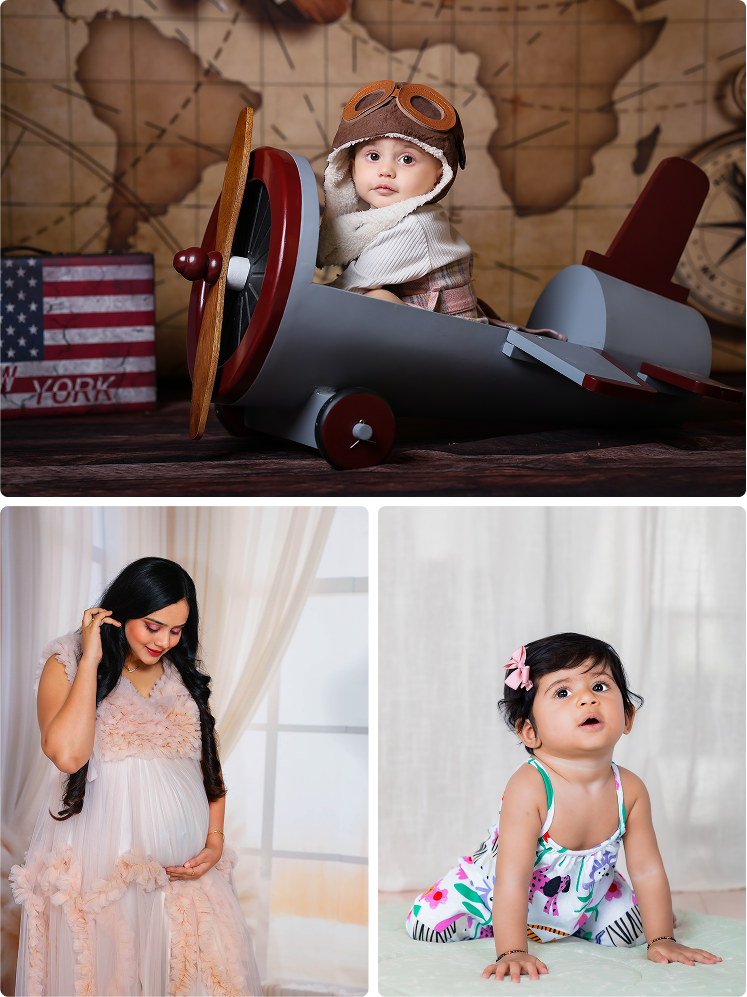
The first year of a baby’s life brings remarkable changes. A newborn who initially spends much of the day sleeping and feeding gradually becomes more alert, interactive and mobile. Over the following months, babies begin smiling, making sounds, reaching for objects, sitting, moving around, responding to familiar people and exploring their surroundings.
These changes are called developmental milestones.
For parents, tracking developmental milestones is not about comparing one baby with another or expecting a child to reach every milestone on an exact date. Babies develop at different rates. Instead, observing these changes can help parents understand how their child is growing and give them useful information to discuss during regular pediatric visits.
This guide explains the major areas of baby development milestones during the first year, what parents can observe at different stages and how to document these changes along the way.
What Are Developmental Milestones?
Developmental milestones are skills or behaviors that many children develop within a particular age range.
They generally fall into several areas:
- Physical development: movement, coordination and use of hands and body
- Communication and language: sounds, gestures and responses
- Social development: interaction with parents and other people
- Emotional development: expressing feelings and responding to familiar people
- Cognitive development: learning, attention, memory and exploring the environment
A milestone is not a deadline.
Some babies may reach a particular skill earlier, while others may take longer. Premature babies may also be assessed using adjusted age during part of their early development, depending on their pediatrician’s advice.
The purpose of tracking is to notice your baby’s individual progress rather than create pressure to follow a perfect timetable.
Why Should Parents Track Baby Development Milestones?
Parents naturally notice changes in their baby’s behavior, but writing them down can make those changes easier to remember.
Tracking milestones can help parents:
- Remember when new skills appeared
- Notice patterns in development
- Share useful observations with a pediatrician
- Document changes in movement and communication
- Record special firsts
- Understand their baby’s emerging personality
- Create a meaningful record of the first year
It can also be reassuring to look back and see how much your baby has changed over several months.
A simple notebook, phone note or baby journal is enough. You do not need an elaborate tracking system.
Developmental Milestones During the First 3 Months
The newborn period is a time of rapid adjustment. During the first few months, parents may notice their baby becoming increasingly alert and responsive.
Physical development
Parents may observe:
- Increasing head control
- More active movement of the arms and legs
- Bringing hands closer to the face
- Beginning to open and close hands more deliberately
- Briefly lifting the head when positioned appropriately
Tummy time, when recommended and supervised appropriately, provides opportunities for babies to practice movement and head control.
Communication
Early communication is not limited to words.
Babies may:
- Make different sounds
- Cry to communicate needs
- Respond to familiar voices
- Become more alert when spoken to
- Begin experimenting with sounds
Talking, singing and responding to your baby are simple ways to encourage early communication.
Social and emotional development
During the early months, babies gradually become more socially responsive.
Parents may notice:
- Increased eye contact
- Watching faces
- Calming in response to familiar voices
- Smiling socially
- Becoming more expressive
These small interactions are important parts of early development.
Developmental Milestones Around 4 to 6 Months
Between four and six months, many babies become more interactive with their surroundings.
Physical milestones
Parents may notice:
- Better head control
- Reaching for objects
- Holding and exploring toys
- Bringing objects toward the mouth
- Rolling in some directions
- Becoming more interested in movement
Every baby develops differently, so parents should observe progress rather than expect a particular skill on a specific day.
Communication milestones
Babies may begin:
- Making more varied sounds
- Laughing
- Responding to voices
- Making sounds to attract attention
- Taking turns making sounds with adults
Talking back to your baby can encourage this early back-and-forth communication.
Cognitive development
Babies increasingly explore their surroundings.
You may notice your baby:
- Watching moving objects
- Looking for interesting sounds
- Exploring toys with their hands and mouth
- Showing interest in new surroundings
- Beginning to recognize familiar people
Simple games such as talking, singing and playing with age-appropriate objects can provide opportunities for exploration.
Developmental Milestones Around 7 to 9 Months
The second half of the first year often brings noticeable changes in mobility and interaction.
Physical development
Depending on the child, parents may observe:
- Sitting independently
- Reaching for objects
- Passing objects from one hand to another
- Moving around through crawling or other forms of mobility
- Beginning to pull toward standing
Not every baby crawls in the same way, and some children use different movement patterns before walking.
Communication
Communication becomes increasingly expressive.
Babies may:
- Babble
- Repeat sounds
- Respond to their name
- Use sounds or gestures to attract attention
- Show excitement through vocalizations
Parents can support language development by talking to their baby throughout everyday activities.
For example, describe what you are doing while feeding, bathing or getting your baby dressed.
Developmental Milestones Around 10 to 12 Months
As the first birthday approaches, many babies become increasingly mobile and socially interactive.
Physical development
Parents may notice:
- Pulling up to stand
- Moving while holding onto furniture
- Picking up smaller objects using their fingers
- Increasing coordination between hands and eyes
- Standing with support
- Attempting independent steps
Walking does not necessarily happen by the first birthday. There is considerable normal variation in when children begin walking.
Communication
At this stage, babies may increasingly communicate through:
- Babbling
- Gestures
- Pointing
- Imitating sounds
- Responding to familiar words
- Using sounds or early words to communicate
Parents can encourage communication by responding to gestures and sounds rather than expecting formal speech.
Social and emotional development
Babies may show stronger preferences for familiar people and objects.
You might notice:
- Enjoyment of social games
- Imitating gestures
- Showing preferences
- Responding to facial expressions
- Showing affection toward familiar people
- Reacting when a parent leaves or returns
These behaviors are part of the developing social and emotional relationship between the baby and their caregivers.
The Five Areas of Baby Development Parents Can Observe
Rather than focusing only on physical milestones, parents can look at development across several areas.
1. Gross motor development
Gross motor skills involve larger body movements.
Examples include:
- Head control
- Rolling
- Sitting
- Crawling or other movement
- Pulling to stand
- Walking
2. Fine motor development
Fine motor skills involve smaller movements, particularly using the hands and fingers.
Examples include:
- Reaching
- Grasping toys
- Transferring objects between hands
- Picking up small objects appropriately
- Exploring objects with the fingers
3. Language and communication
Communication develops long before a baby speaks recognizable words.
Parents can observe:
- Eye contact
- Vocalizations
- Babbling
- Responses to voices
- Gestures
- Pointing
- Imitation
- Emerging words
4. Social and emotional development
This includes how babies interact with people and express emotions.
Parents may observe:
- Smiling
- Responding to familiar people
- Enjoying interaction
- Showing preferences
- Imitating expressions or actions
- Reacting to separation and reunion
5. Cognitive development
Cognitive development involves how babies learn about and interact with the world.
Parents can observe:
- Attention to objects
- Exploring toys
- Looking for objects
- Imitating actions
- Responding to familiar routines
- Showing curiosity about new surroundings
Create a Simple First-Year Milestone Tracker
You do not need to record every small change.
A simple table or notebook can include:
Age | New Skill | Date Noticed | Notes |
2 months | New social response | ||
4 months | New movement | ||
6 months | New communication behavior | ||
9 months | New mobility skill | ||
12 months | New movement or communication skill |
The important part is recording your baby’s actual development, rather than filling the tracker with expected achievements.
Use Photos and Videos to Document Milestones
Developmental changes can be difficult to remember because they happen continuously.
Photographs and short videos can help preserve these moments.
Consider documenting:
- First big smile
- First time sitting
- Favorite toy
- First family outing
- First festival
- New expressions
- First attempts at standing
- Interaction with siblings
- Time with grandparents
- First birthday
You do not need a professional photoshoot for every milestone. Everyday photographs can be just as meaningful.
For particularly important stages, some families also choose professional baby photography to create polished portraits alongside their everyday photographs.
Don’t Turn Milestone Tracking Into Comparison
Social media can make it appear as though every baby follows the same development timeline.
Real development is more varied.
One baby may begin crawling earlier, while another may spend more time exploring from a sitting position. One child may become vocal early, while another may communicate more through gestures initially.
Comparing babies can create unnecessary anxiety.
Instead, ask:
“What new skills is my baby developing?”
That question keeps the focus on your child’s individual progress.
When Should Parents Talk to a Pediatrician?
Parents should discuss developmental concerns with their child’s pediatrician rather than relying solely on online milestone charts.
Consider raising concerns if:
- Your baby appears to lose a skill they previously had
- You notice a persistent concern about development
- Your baby is not progressing in an area of development
- You are concerned about movement, communication, hearing, vision or social interaction
- Something about your baby’s development does not seem right to you
A missed milestone does not automatically mean that a child has a developmental disorder.
However, parents do not need to wait if they are concerned. A pediatrician can consider the child’s overall development, medical history and individual circumstances and determine whether further evaluation is appropriate.
If your baby was born prematurely, ask the pediatrician how developmental milestones should be interpreted using your baby’s adjusted age.
Questions Parents Can Ask During Pediatric Visits
Keeping notes can make medical appointments more productive.
You could ask:
- Is my baby’s development progressing as expected?
- Are there particular skills I should observe next?
- Is there anything I should encourage through play?
- Should I use adjusted age when tracking development?
- Is there a developmental change that I should monitor?
- When should I contact you about a concern?
Bring your milestone notes if they are useful to you.
A Baby’s First Year Is More Than a Checklist
Developmental milestone charts are useful reference points, but they should not become a checklist that parents feel pressured to complete.
Your baby’s first year also consists of countless small moments:
The first time they recognize your voice.
The expression they make when they see something interesting.
The way they reach toward a favorite toy.
The sound they make when they are excited.
The way they interact with a grandparent.
These moments may not appear on a formal milestone chart, but they are part of your child’s individual story.
How Parents Can Preserve These Developmental Memories
Consider combining your milestone notes with photographs.
For each important change, record:
What happened:
What new skill did your baby show?
When you noticed it:
Write down the approximate date.
Where it happened:
Home, during playtime, while visiting family or somewhere else.
Who was there:
Parents, siblings, grandparents or other family members.
How your baby reacted:
Was your baby excited, curious, surprised or playful?
A photograph or video:
Add a visual record when possible.
Over time, these notes can become a meaningful first year baby memory book.
Final Thoughts
The first year is a period of enormous change, but every baby follows an individual developmental path.
Parents can observe development across physical movement, fine motor skills, communication, social interaction, emotional expression and cognitive exploration. Recording these changes can help families remember important moments and provide useful information during pediatric appointments.
Most importantly, milestone tracking should be about observing and understanding your baby, not comparing your baby with someone else’s child.
Take photographs, write down the little details and enjoy the process of watching your child discover the world.
Those everyday moments often become the memories families value most.