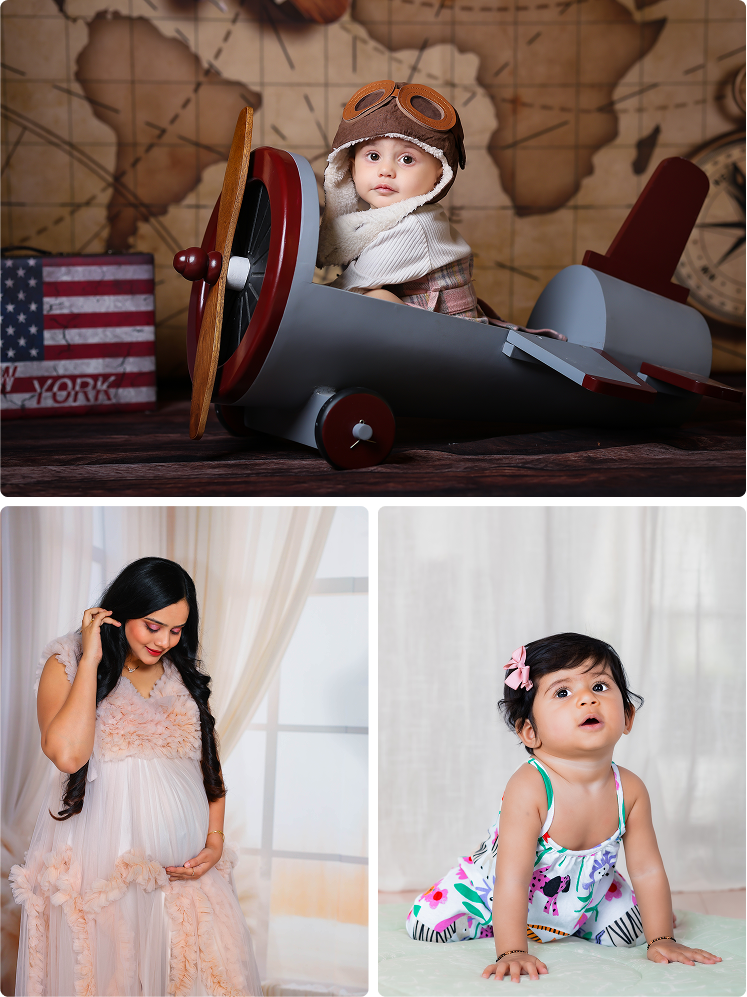
Parents often remember the big moments.
The day their baby was born.
The first birthday.
The first steps.
The first day of school.
Family holidays.
Major celebrations.
But childhood is made up of far more than milestones.
It is also made up of the tiny details that fill ordinary days: the toy a child carried everywhere, the funny way they pronounced a word, the book they asked you to read repeatedly, the way they fell asleep, the song they danced to, or the place they always wanted to sit at the dinner table.
These details may feel unforgettable while they are happening.
But childhood keeps moving.
Children change, routines change, and new memories take the place of old ones. Eventually, some of those small details can become difficult to recall.
That doesn’t mean parents have failed to remember their child’s childhood. Human memory simply isn’t a perfect recording system.
Photographs, short notes, videos, albums, and family stories can provide useful reminders of the details that might otherwise become harder to recall.
The goal isn’t to document everything.
It is to preserve some of the moments that make your family’s particular childhood story unique.
The Small Details Can Be the Easiest to Forget
Major events tend to receive attention because they are clearly defined.
But everyday childhood is different.
There may be hundreds of small moments that don’t seem important enough to document at the time.
A child always sleeps with a particular stuffed animal.
They insist on wearing the same pair of shoes.
They have a funny expression when they’re concentrating.
They mispronounce a favorite word.
They dance whenever a particular song plays.
They sit in the same spot beside a parent.
These details can become difficult to remember later because they are part of everyday life.
Ironically, ordinary moments are often the ones that change without anyone noticing.
The Sound of Your Child’s Early Words
Parents may remember a child’s first word.
But what about the words that came afterward?
Children often create their own versions of words while learning to speak.
A familiar object may receive a funny name.
A sentence may be pronounced in an unusual way.
A child may develop a particular phrase that they repeat constantly.
These details can disappear as their language develops.
A photograph cannot capture sound, so this is one area where a short written note or video can be particularly valuable.
Write down the funny phrase.
Record the story.
Keep a short video occasionally.
You don’t need to preserve every conversation.
Just the moments that make you think, “I don’t want to forget this.”
Favorite Toys Have Their Own Stories
Children can become deeply attached to particular objects.
A stuffed animal.
A blanket.
A toy car.
A doll.
A building set.
A book.
A costume.
Parents often remember that an object was important, but may eventually forget how important it actually was.
Photograph your child with their favorite toy.
Take a picture of the toy itself.
If there is a story behind it, write it down.
Years later, seeing that object may bring back a whole period of childhood.
Everyday Family Routines Change
Family routines can feel permanent when you’re living through them.
Perhaps your child wakes up early and climbs into your bed.
Maybe you read the same book every night.
Perhaps Sunday mornings involve breakfast with grandparents.
Maybe your family goes to the same park every weekend.
These routines can change as children grow.
School schedules change.
Interests change.
Family circumstances change.
Children become more independent.
Eventually, a routine that once happened hundreds of times may stop completely.
A few photographs or notes can preserve what that period of everyday life looked like.
The Way a Child Sleeps Can Be Surprisingly Memorable
Parents spend an enormous amount of time observing sleeping babies and children.
The position they sleep in.
The blanket they prefer.
The stuffed animal beside them.
The way they hold a parent’s hand.
The funny position they somehow manage to find.
These details may seem insignificant.
But they can become powerful reminders of an early stage of childhood.
If you photograph sleeping children, always prioritize their comfort and safety rather than trying to create a particular pose.
A simple photograph of a child asleep in their usual environment can be enough.
The Little Things Children Carry Everywhere
Many children have objects they don’t want to leave behind.
A small toy goes to the supermarket.
A blanket comes on every trip.
A particular bag appears in countless photographs.
A favorite book travels between rooms.
Eventually, the object is replaced by something else.
Photographing these objects alongside the child can preserve a detail of their personality at that particular age.
It also provides context.
Years later, the child may recognize the object and immediately remember how much they loved it.
Funny Expressions May Not Last
Children’s expressions change as they grow.
A baby makes a particular face when surprised.
A toddler develops a dramatic reaction to something they dislike.
A young child has a distinctive smile.
These expressions may be completely characteristic of that stage.
But once the child grows, the expression may disappear.
Rather than asking a child to repeat a particular expression constantly, simply photograph them naturally when it happens.
Authentic expressions often tell more about personality than forced smiles.
The Way Siblings Interact Changes
Sibling relationships evolve throughout childhood.
A toddler may follow an older sibling everywhere.
Two young children may spend hours building something together.
Siblings may have a particular game that only they understand.
They may argue constantly one year and become close friends later.
Photographs can preserve these changing relationships.
Don’t photograph only formal sibling portraits.
Capture them reading together, playing, helping one another, or simply sharing the same space.
The relationship is often more meaningful than the pose.
Parents Can Forget What Their Home Looked Like
Your home may feel completely familiar today.
But homes change.
Furniture is replaced.
Walls are painted.
Children’s rooms evolve.
Toys disappear.
Families move.
A photograph of ordinary home life can preserve details that you may not think to remember.
A child’s room, for example, can tell a story about their interests at a particular age.
The books on the shelf.
The drawings on the wall.
The toys on the floor.
The bed they slept in.
Years later, those details can help recreate a period of family life that would otherwise exist only as a vague memory.
Don’t Forget the People Around Your Child
Parents naturally photograph their children.
But the people who surround them deserve attention too.
Grandparents.
Siblings.
Cousins.
Aunts and uncles.
Family friends.
Caregivers.
These relationships form an important part of childhood.
A photograph of a child with a grandparent can preserve a relationship that may look different years later.
Similarly, photographs of siblings together can document how their relationship developed.
The photograph becomes a record not only of who the child was, but who was there.
Family Celebrations Have Small Details Too
Birthdays and festivals naturally produce many photographs.
But instead of photographing only the final group picture, consider documenting the details.
The birthday decorations.
A child’s reaction to the cake.
A grandparent preparing food.
Siblings waiting for the celebration.
A favorite outfit.
The toys after the guests leave.
The family sitting together at the end of the day.
These photographs create a fuller story.
A celebration isn’t just the moment everyone looks at the camera.
It is everything that happens around it.
The First Versions of Things Don’t Last
Children experience many “firsts.”
First haircut.
First favorite book.
First school bag.
First bicycle.
First drawing.
First hobby.
First performance.
First trip.
The major firsts are often documented.
But the smaller firsts may not be.
What was the first book your child wanted to hear repeatedly?
What was the first toy they truly loved?
What was the first activity they could do independently?
These details can be worth documenting because later versions replace them.
Photograph the Temporary Things
A useful question for parents is:
“What is likely to change soon?”
That might be:
- A favorite toy
- A child’s room
- A hairstyle
- A favorite outfit
- A family routine
- A school bag
- A favorite playground
- A relationship with a particular object
- A child’s way of speaking
- A favorite activity
You don’t need to photograph everything that changes.
But noticing temporary details can help you decide what is worth preserving.
Your Child’s Personality Is More Than Milestones
A milestone tells you that something happened.
Personality tells you something about the child experiencing it.
Perhaps your child is unusually curious.
Maybe they love helping adults.
Perhaps they spend hours creating imaginary games.
Maybe they are fascinated by animals.
Maybe they love music.
Maybe they carefully organize their toys.
These characteristics can change too.
Photograph your child doing the things that make them themselves.
Those images can become more meaningful than a collection of formal milestone photographs.
Write Down the Stories Behind Photographs
A photograph can preserve what something looked like.
A short note can preserve why it mattered.
Consider adding a sentence to selected photographs:
“She carried this rabbit everywhere when she was three.”
“This was the book he asked us to read every night.”
“They built this fort together every Sunday that summer.”
“Grandma used to sit here and read with them.”
These notes don’t need to be long.
A few words can provide context that might otherwise disappear.
Let Children Tell You What They Remember
As children become older, they can become participants in preserving family memories.
Look through photographs together and ask:
- “What do you remember about this?”
- “Who was there?”
- “What were you doing?”
- “What was your favorite part?”
- “Do you remember this toy?”
- “What do you think happened afterward?”
Their answers may be different from what you remember.
That’s valuable.
A family memory doesn’t have to belong to only one person’s version of the story.
Children can contribute their own perspectives as they grow.
Don’t Turn Memory Preservation Into a Full-Time Job
Parents already have enough responsibilities.
You don’t need a complicated memory-preservation system.
You don’t need to photograph every meal.
You don’t need to create a detailed journal every day.
You don’t need to print every photograph.
A simple approach can be enough.
Take a few meaningful photographs
Choose moments that show something distinctive about your child’s current stage.
Add occasional notes
Write down a funny phrase, favorite activity, or memorable event.
Back up important digital photographs
Don’t rely on a single device.
Print selected images
Give particularly meaningful photographs a physical form.
Revisit them
Look through the photographs with your family occasionally.
The system should support family life, not take it over.
Professional Photography Can Preserve a Particular Chapter
Everyday photographs are valuable because they capture spontaneous moments.
Professional photography can serve a different purpose.
Parents may choose a professional newborn, baby, family, maternity, or birthday session when they want to intentionally document a particular chapter.
A professional session can also make it easier for parents to be included in the photographs rather than always being behind the camera.
The purpose isn’t to replace everyday photography.
It is to complement it.
Your phone can document ordinary Tuesday mornings.
A professional session can intentionally preserve a particular stage of your family’s life.
Both have a place.
Some Photographs Become More Valuable With Time
The emotional importance of a photograph can change.
A picture that seems ordinary today may become meaningful years later.
You may eventually miss the room shown in the background.
A child may become interested in the toy they once carried everywhere.
A photograph with a grandparent may become particularly important.
A family portrait may remind everyone of a period when the family lived in one place.
You cannot always predict which photograph will become the most meaningful.
That is another reason not to judge photographs only by how technically perfect they are.
Sometimes the photograph with the strongest emotional connection is not the most polished one.
What Parents Should Photograph More Often
Instead of trying to capture everything, consider occasionally photographing:
Your child’s favorite things
Toys, books, clothes, activities, and places.
Your child’s relationships
Parents, siblings, grandparents, cousins, and close family members.
Your child’s environment
Bedroom, home, school surroundings, playgrounds, and favorite places.
Your child’s personality
Expressions, hobbies, concentration, curiosity, humor, and play.
Your family’s everyday life
Meals, reading, weekends, walks, routines, and quiet moments.
Important changes
New interests, new independence, new environments, and transitions.
These categories can provide a more complete picture of childhood than milestones alone.
What About Photographs That Aren’t Perfect?
Keep them.
A photograph may be slightly blurry.
Someone may not be looking at the camera.
The background may be messy.
A child may have an unusual expression.
The lighting may not be perfect.
If the photograph captures something meaningful, it can still have value.
Family photography isn’t a competition for technical perfection.
A photograph’s long-term value can come from what it reminds you of.
The Goal Is Not to Remember Everything
It is impossible to preserve every detail of childhood.
And it isn’t necessary.
Families don’t need a complete photographic archive of every day.
The purpose of documenting childhood is simply to give yourself reminders of the moments and details you may want to revisit.
Choose intentionally.
Capture naturally.
Write when something feels worth remembering.
Print what matters.
And spend more time living the moment than photographing it.
Final Thoughts
Parents often remember the major milestones of childhood. But the smaller details can be just as meaningful. The favorite toy. The funny word. The bedtime routine. The family pet. The messy bedroom. The way siblings played together. The grandparent who visited every Sunday. The book that was read again and again. The expression that belonged to one particular stage. These things may seem ordinary while they are happening. Then childhood moves forward. The toy gets replaced. The room changes. The routine disappears. The funny word becomes a normal word. The child becomes more independent. You may remember some of these details clearly. Others may become harder to recall. That is why documenting childhood can be valuable. Not because photographs guarantee that memories will never fade, but because they give families something to return to. Take photographs when something feels meaningful. Write down the stories that you don’t want to lose. Include the people and places that make up your child’s world. And every once in a while, stop and look at what you have captured.
You may discover that the photograph you almost didn’t take is the one that eventually brings an entire chapter of childhood back to life.